

Neva Valley
West Ligury
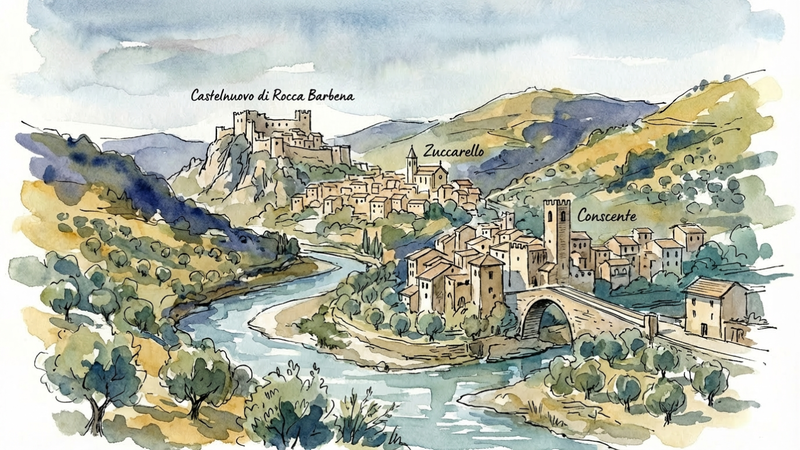

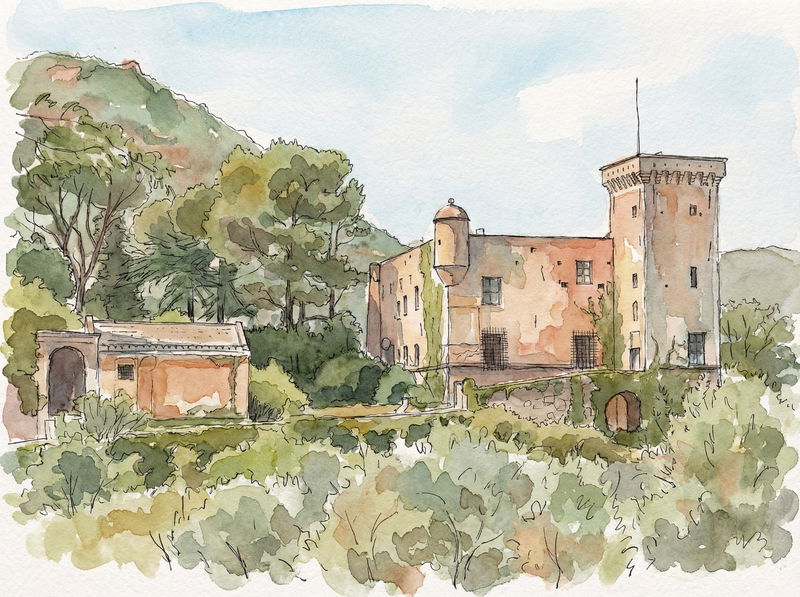
The crumbling limestone skeleton of Conscente Castle looms over the Pennavaira Valley, its jagged profile cutting a sharp silhouette against the Ligurian sky. Far from a manicured monument, the fortress wears its history in the form of weathered stone and encroaching greenery, reflecting the centuries it spent as a defensive sentinel for the Costa-Del Carretto family. Narrow slit windows and thick, unyielding walls evoke a sense of medieval austerity, while the surrounding olive groves and quiet village rooftops provide a soft, pastoral contrast to its rugged, battle-worn character.
The Italian village of Zuccarello emerges from the lush greenery of the Neva Valley as a remarkably preserved relic of the late 13th century. Characterized by its single, long main street lined with heavy stone porticoes, the town’s architecture was designed for both commerce and defense, allowing medieval merchants to display their wares sheltered from the elements. The weathered pastel facades and slate-roofed houses are connected by a labyrinth of narrow, arched alleyways (known as caruggi) that eventually lead to the panoramic ruins of the Del Carretto Castle standing guard on the ridge above. A slender, humpbacked Romanesque bridge vaults over the river at the village edge, completing a scene that feels less like a modern town and more like a living gallery of Ligurian history.
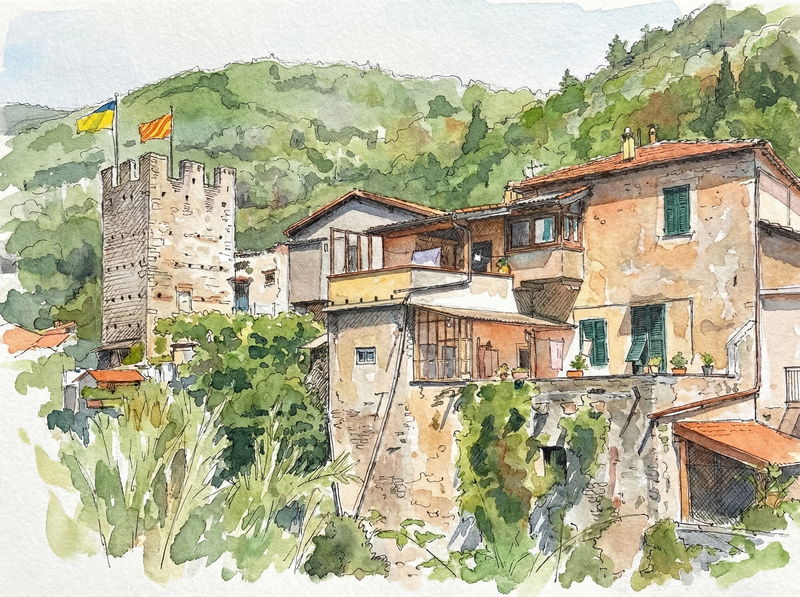
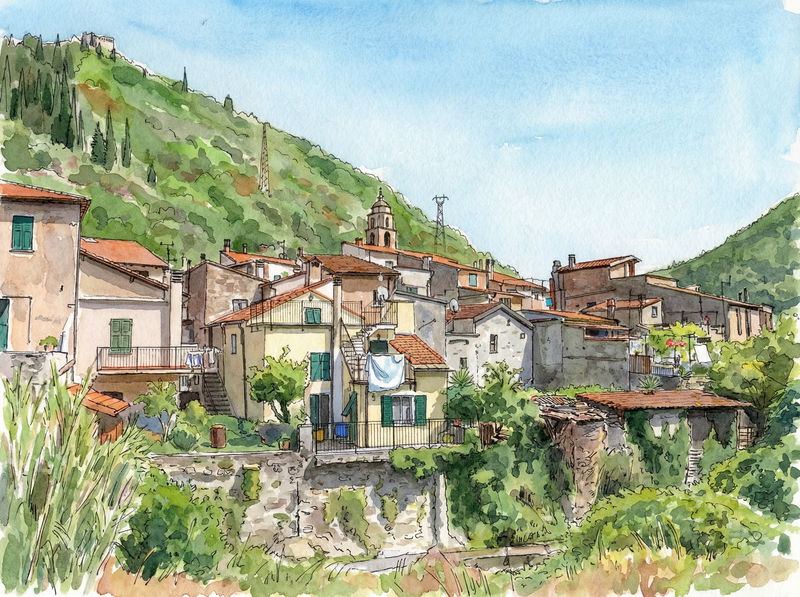
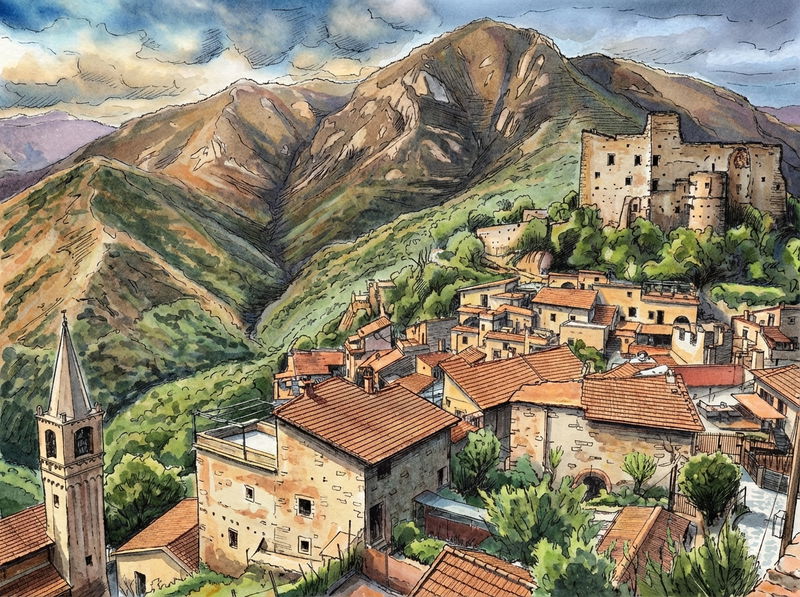
The gray stone houses of Castelvecchio di Rocca Barbena seem to grow directly out of the jagged Ligurean crags, forming a silent, monochromatic labyrinth that has remained largely unchanged since the 11th century. Located in the Val Neva, this village eschews the typical pastel hues of the Italian Riviera in favor of rugged, unpainted masonry and narrow alleys—known as caruggi—that wind beneath heavy stone arches and buttresses. At its summit, the skeletal ruins of the Clavesana Castle overlook a landscape of silver-green olive groves and dense chestnut forests, creating an atmosphere of austere seclusion. The air here carries a stillness that feels heavy with the passage of time, making it less a tourist destination and more a living relic of medieval defensive architecture.

Commenti
Ancora nessun commento. Sii il primo a commentare!